There’s a point—somewhere between the thin mountain air and your first real appetite—when a restaurant stops registering as a place you’ve arrived at and starts to feel like a clearing. Not an escape, exactly, but an opening. Naar sits squarely in that space.
This is Prateek Sadhu’s project, his idea of what destination dining in India could look like if it were stripped of pretense but not ambition—and it lands. We ran into him as we were leaving Amaya and ended up in one of those conversations that doesn’t feel like small talk or performance. We spoke about the meal, about Naar more broadly, and he offered a handful of Singapore recommendations that I’ve already mentally bookmarked for another trip.
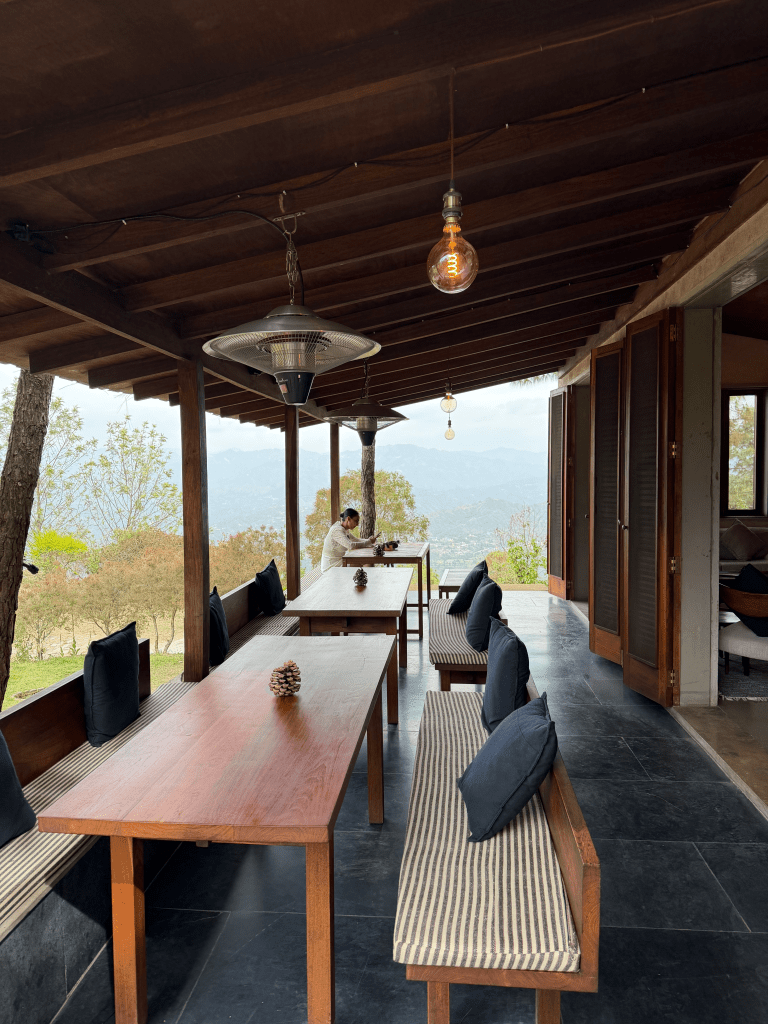
In retrospect, we had an early signal of what Naar would be. On our first day at Amaya, wandering the property, we heard retro ’80s rock carrying across the hills before we even saw the restaurant. It felt slightly out of place, which is to say, exactly right.
Not long after, we met Dixit Kaundal, the head mixologist, who walked us out to what the team calls the “Naar spot”—a quiet edge overlooking the valley where they do their daily briefings. It’s the kind of view that recalibrates you. We told him we were coming in for a meal and got into an easy conversation about cocktails. He was deeply knowledgeable, clearly exacting, but none of it came with the weight you sometimes feel in more self-serious dining rooms. There was a lightness to him—maybe it was the earring, maybe just the way he carried himself—that stayed with me. It also turned out not to be an anomaly.
That same sensibility runs through the entire room. The work is precise, often intricate, but the people aren’t trying to impress you with it. Service happens in hoodies and aprons, conversations feel natural, and there’s a noticeable absence of that tightly wound energy you get in a lot of “top restaurant” environments. If anything, it feels like some of this team has stepped away from places like Masque in Bombay and kept the discipline while leaving the posturing behind.
The meal typically begins in what they call the living room, though we opted to start outside. The weather made the decision for us—the kind of afternoon where sitting indoors would have felt like missing the point.
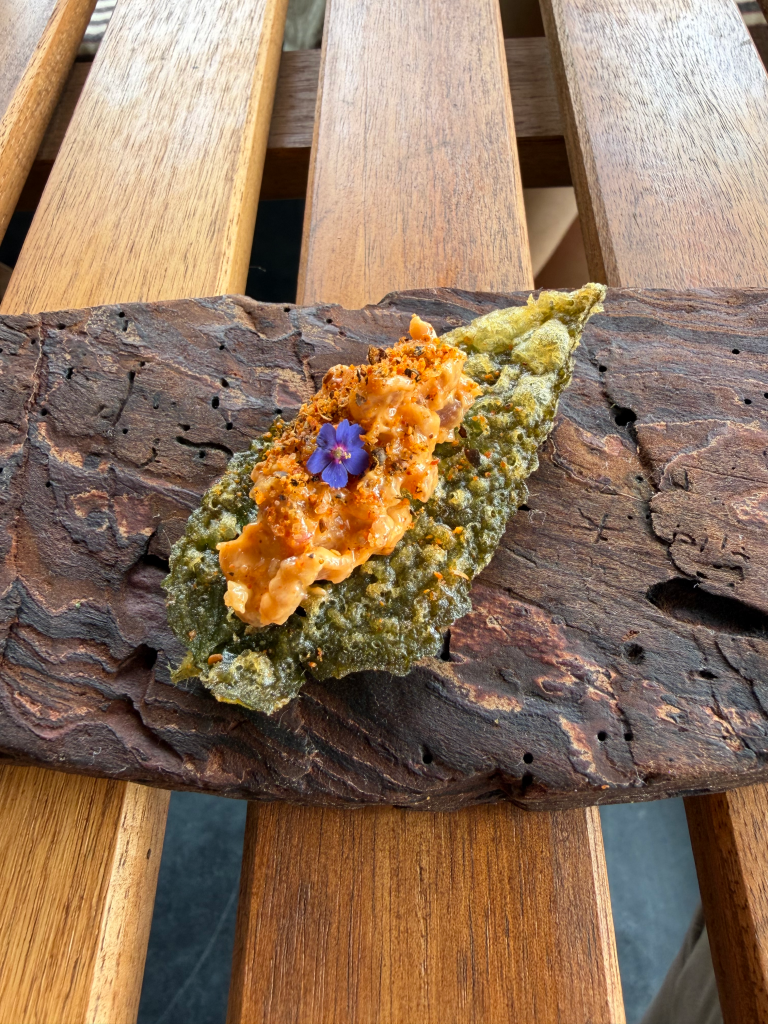
Early on, there was a crisp bichubutti leaf (stinging nettle) paired with a fried mushroom that ate almost like a ssam—textural, slightly electric, grounded in ingredients that felt entirely local. It was one of those bites that makes you pause, not because it’s loud, but because it’s so clearly thought through.
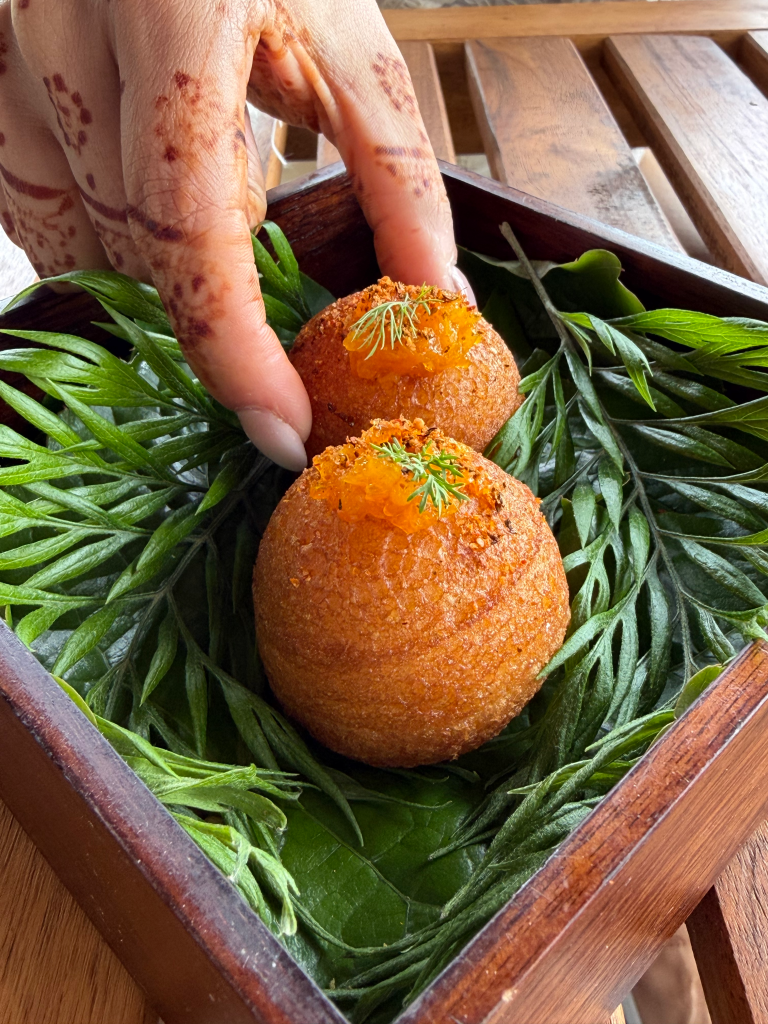
A miniature kachori followed. Coming from a Rajasthani background, it’s a form I know well, but this version felt deliberately reframed—smaller, sharper. Before we ate, the server asked us to guess what the course was. When we hesitated, he shrugged it off with a smile and said they were going to keep feeding us either way. It was a throwaway line, but it captured something important: this wasn’t a tasting menu built on restraint for its own sake. You leave full, in the best way.
There were moments where I expected something to tip into gimmick and it didn’t. A black pepper jam, for instance, sounded like it might lean conceptual. Instead, it opened up—warm, slightly sweet, more expansive than I anticipated.
The morel skewer over foam was probably the most overtly technical dish, but even there, the reference point was familiar. The aroma landed first—deep, caramelized, unmistakably reminiscent of French onion soup. The foam carried that same flavor profile but in a lighter, almost atmospheric form, dissolving quickly and leaving the morels to ground the dish. It was clever without feeling showy.
My dining companion, meanwhile, moved through a parallel arc with the restaurant’s treatment of the famed Himachal river trout. He’s an avid seafood eater, but not someone who reaches for trout in the States. Here, it appeared across multiple courses—each one distinct enough to feel like a new introduction. By the end of the meal, he was convinced. It’s not often a single ingredient reshapes your preferences, but Naar made a case for it.
The course that stayed with me most was quieter: vegetables in a timru broth. Timru, a Himalayan pepper related to Sichuan pepper, has a citrusy, gently numbing quality. It came through in a broth that felt restorative more than anything else, served with short-grain rice and a six-minute egg that broke just enough to bring everything together.
And then, in a move that felt almost radical in its humanity, the meal paused. The chefs encouraged diners to step outside, to walk, to look at the mountains, to acknowledge fullness, both physical and sensory. It was an invitation to reset, to re-enter the experience rather than power through it.
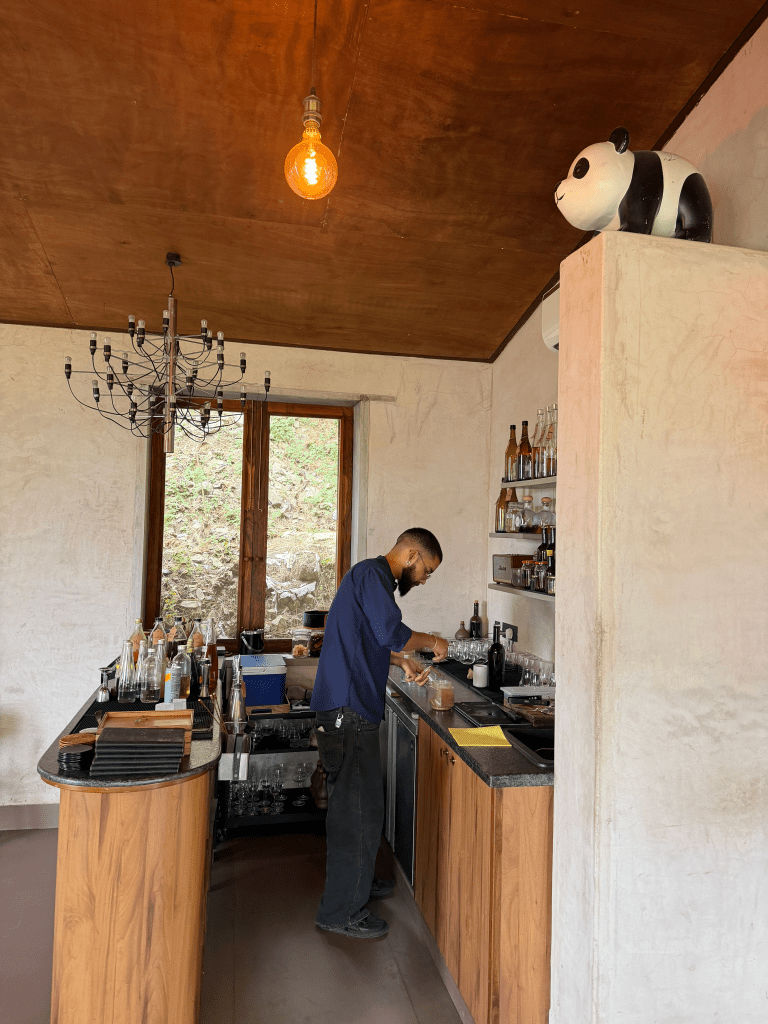
We took that moment, wandered, and found Dixit Kaundal again. What followed felt less like service and more like serendipity. He invited us back inside for what became a kind of private interlude in the exquisitely designed dining room. He crafted cocktails not on the menu, just for us to celebrate the occasion. He spoke about the property’s philosophy: everything is grown on-site, everything is repurposed, nothing goes to waste.
His version of a martini, with pickled strawberries from the farm, leaned herbal and clean. It didn’t need the usual olive brine to feel complete. Another drink, built around oxidized wine and a local spirit, came closest to a French 75 I’d had on this trip, though with a softer, slightly licorice finish. At some point, he pointed out the small panda motifs scattered around the room—an odd detail, but one that made the space feel a little more personal.
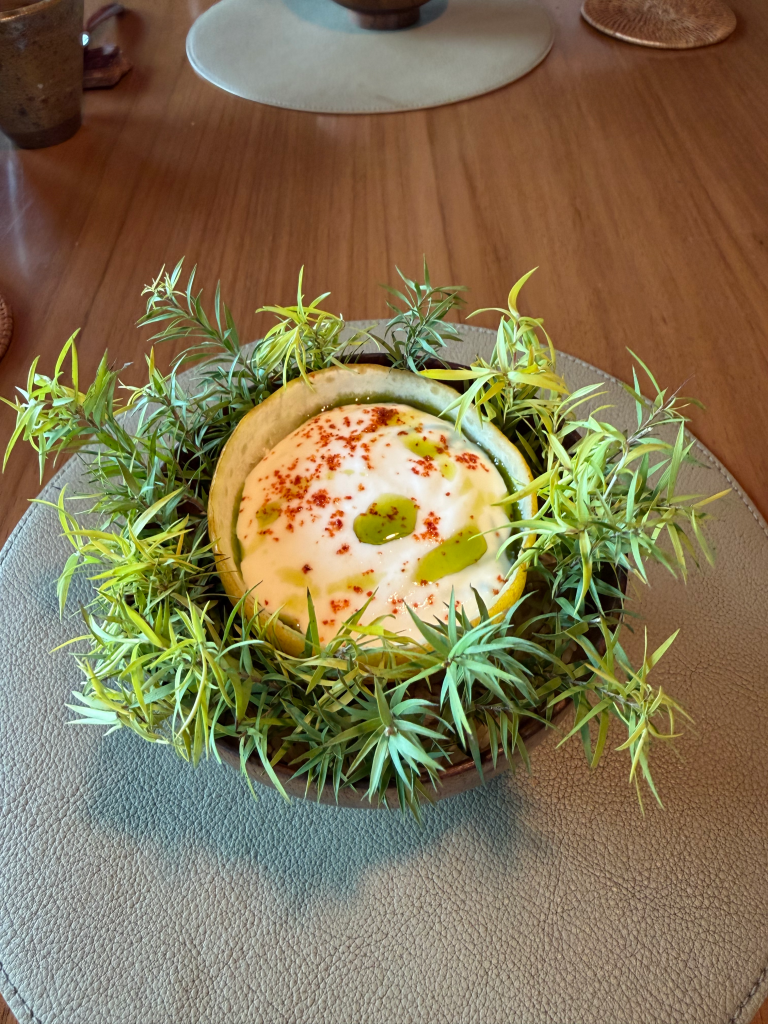
Dessert followed the same rhythm as the rest of the meal—unrushed, layered. A galgal (Himalayan lemon) preparation with yogurt and lemon cream, finished with sorrel oil, was bright without being sharp. Then a small s’mores-style cake with hot chocolate, which, in that setting, felt exactly right.
If there’s one thing I’d change, it’s simply access. Naar only offers its full dinner service on Fridays and Saturdays. We were there on other days, so we experienced it at lunch. While lunch was excellent, it didn’t quite carry the same sense of build—the slower, more immersive arc you imagine for a meal like this. It feels designed for evening, for that gradual fade of light across the mountains. Limiting it makes it more coveted, sure, but also just slightly out of reach.
What lingers, more than any single dish, is how little Naar seems interested in performing fine dining in the way so many restaurants now feel compelled to. There is no choreography for its own sake, no sense that you are being ushered through a script. The precision is there, the ambition is unmistakable—but it’s worn lightly, almost incidentally.
Out here, that restraint reads less like a choice and more like an understanding. And it’s what makes Naar feel not just memorable, but quietly, confidently different.

 The Eating House